
The irony that makes Caleb Hammer’s net worth narrative intriguing is this: A man who was once $70,000 in debt—including car loans, student loans, family obligations, and credit card debt—now has an estimated net worth of $4–5 million. He manages one of the most extensive channel membership programs on YouTube and has accumulated more than 3.3 billion views on his videos, in which he instructs others on financial management. It is noteworthy that he did not achieve wealth through a conventional finance career; rather, he attained success by candidly discussing financial matters online. This non-traditional strategy proved to be remarkably effective.
Who Is Caleb Hammer? Quick Bio Snapshot
At a Glance — Bio Table
| Field | Details |
|---|---|
| Full Name | Caleb Hammer |
| Date of Birth | February 14, 1995 |
| Age (2026) | 31 years old |
| Birthplace | Kalamazoo, Michigan, USA |
| Current Residence | Austin, Texas, USA |
| Nationality | American |
| Height | 6 feet 1 inch (185 cm) |
| Education | Western Michigan University — Music Composition (did not complete) |
| Profession | YouTuber, Financial Coach, Entrepreneur |
| Company | Hammer Media (founded 2022) |
| App | DollarWise (formerly Simpler Budget) |
| YouTube | @calebhammer — 3.07M subscribers |
| TikTok | 3.4M+ followers |
| 1M+ followers | |
| YouTube Total Views | 3.3 Billion+ views |
| Relationship Status | Single |
| Children | None |
| Net Worth (2026) | $4 Million – $5 Million (Estimated) |
| Monthly YouTube Earnings | Approximately $226,000 |
What Is the Financial Audit Show?
Financial Audit is the YouTube show that made Caleb Hammer famous — and it is genuinely unlike anything else in personal finance content. The format is simple on the surface. A real person sits down with Caleb, hands over their financial information, and gets a thorough, completely unfiltered breakdown of everything wrong with their money situation. Income, debt, spending habits, savings rate, credit score — all of it, on camera, in public.
The show works because of what it is not. It is not a whiteboard explainer. It is not an investment tips video. It is not someone in a suit telling you what a hedge fund does. It is real people in real trouble getting real feedback from someone who clearly knows what he is talking about and is not going to soften it to protect anyone’s feelings.
By November 2025, Financial Audit had become the largest channel-membership program on YouTube — generating more recurring revenue from dedicated subscribers than any other YouTube channel. That achievement says more about his business model than any net worth estimate could.
Caleb Hammer Net Worth in 2026

Current Net Worth Estimate and Why It Is Hard to Pin Down
Caleb Hammer’s net worth in 2026 is estimated between $4 million and $5 million according to the most credible recent sources. YouTubers.me estimates $4.08 million specifically, based on his verified YouTube earnings data. AgeOrBiography places the figure at $4 million to $5 million. People and Media gives a wider range of $2 million to $10 million, reflecting genuine methodological disagreement about how to value his channel membership income, brand partnerships, Austin real estate, and app revenue.
The $4 million to $5 million range is the most defensible estimate because it is grounded in verifiable platform data rather than speculation. His YouTube channel alone generates approximately $226,000 per month in ad revenue. That is $2.7 million annually from a single income stream — before memberships, sponsorships, app sales, or any other revenue source is factored in.
Why is his net worth not higher, given those earnings? Because running a media business at his scale costs real money. Studio space in Austin. Production crew. Guest travel compensation — he pays guests to come film. App development and maintenance for DollarWise. Hammer Media operational costs. Following the deduction of taxes at a rate of 35 percent, along with business expenses, the amount that constitutes personal net worth is considerably less than the gross income. The $4 million to $5 million figure reflects accumulated wealth — what remains after everything else.
How His Net Worth Has Grown Year Over Year
His growth trajectory is consistent and genuinely impressive. In 2022, when he was still building his audience from a standing start after launching the channel in May 2020, his net worth was estimated below $500,000. In 2023, as Financial Audit gained significant traction and brand partnerships started to materialize, projections increased to between $1 million and $2 million. By 2024, the channel’s explosive growth pushed estimates to $2 million to $3 million. The 2026 figure of $4 million to $5 million reflects two years of the largest channel-membership program on YouTube operating at full capacity.
That trajectory — doubling net worth roughly every 18 months — is the kind of compounding that happens when a content creator has a genuinely sticky format, multiple income streams, and a business structure that captures recurring revenue rather than depending entirely on one-time ad payouts.
What Caleb Hammer’s Net Worth Tells Us About Creator Finances
The interesting thing about his financial position is not the number itself. It is what the number represents about how creator businesses actually work when built correctly. Most YouTubers depend almost entirely on advertising revenue, which fluctuates with platform algorithm changes, advertiser demand cycles, and video performance. If YouTube changes its monetization rules tomorrow, those creators are vulnerable.
Caleb’s model diversifies against that risk at every level. YouTube ads. Channel memberships that generate recurring monthly income regardless of individual video performance. Brand sponsorships. App sales. Podcast advertising. Each stream provides protection against the others failing. That diversification is exactly what he preaches to his guests on Financial Audit — and he practices it himself.
How Caleb Hammer Actually Makes Money
YouTube Ad Revenue
YouTube advertising is the bedrock of Caleb Hammer’s income. His channel has accumulated 3.3 billion total views across over 4,000 uploaded videos since launching in May 2020. His monthly YouTube earnings are estimated at $226,000 based on platform analytics — approximately $2.7 million annually from ad revenue alone.
The high earnings reflect two things working together. First, his subscriber count of 3.07 million drives consistent viewership. Second, his content niche — personal finance — attracts some of the highest CPM rates on YouTube. Financial services advertisers pay premium rates to reach audiences actively thinking about money. A viewer watching someone get their budget audited is in the perfect mindset to respond to ads from banks, investment apps, and financial tools. His projected CPM of around $1.21 for every 1,000 views might appear modest; however, with a total of 3.3 billion views, it results in an impressive income.
Channel Membership — Hammer Elite
This is the income stream that makes Caleb Hammer genuinely different from almost every other creator in his space. By November 2025, Financial Audit had become the largest channel-membership program on YouTube — meaning more people pay a monthly fee to access premium Caleb Hammer content than any other YouTube channel’s membership program anywhere in the world.
Channel members get access to bonus content, extended episodes, exclusive financial discussions, and a community experience that goes beyond the public videos. Members pay every month, creating a reliable source of income. This helps bring in steady earnings even when individual videos do not perform well. That predictability is enormously valuable for building a stable business. Conservative estimates suggest his membership program generates several hundred thousand dollars annually in recurring income.
Brand Sponsorships and Partnerships

His personal finance audience is commercially valuable in a specific way. People who watch Financial Audit are actively engaged with their money — they are thinking about debt, budgeting, and financial improvement. That makes them ideal customers for financial apps, budgeting tools, investment platforms, and related services. Brands in those categories pay premium sponsorship rates to access audiences with demonstrated financial intent.
His confirmed sponsorship categories include financial technology companies, budgeting apps, investment platforms, and financial education services. At his follower level and engagement rate, individual sponsored segments command between $25,000 and $75,000 per placement. With multiple active brand relationships running across YouTube, TikTok, and the podcast simultaneously, his annual sponsorship income is estimated between $300,000 and $600,000.
He is selective about which sponsors he accepts — a deliberate choice that protects his credibility with an audience that trusts him specifically because he calls out bad financial decisions. Promoting a predatory financial product would destroy the core asset on which his entire business is built.
DollarWise Budgeting App
Caleb created DollarWise — formerly called Simpler Budget — as a direct extension of the Financial Audit mission. The app lets viewers apply the budgeting frameworks he teaches on camera to their own finances in real time. Available on both the Apple App Store and Google Play, it generates income through downloads and in-app features.
The DollarWise app is strategically smart for reasons beyond the direct revenue it generates. Every person who downloads the app becomes a more engaged member of their community. They are not just watching his content — they are actively using a tool he built. This stronger connection builds audience loyalty and helps turn casual viewers into paying members and app users, increasing his overall business value at every step.
Also read: DD Osama Net Worth 2026
Podcast Revenue and Cross-Platform Reach
The Financial Audit podcast extends the show beyond YouTube into audio format — accessible during commutes, workouts, and daily routines where video consumption is impractical. The podcast generates advertising revenue independently of the YouTube channel, with financial service sponsors paying for access to his listening audience.
His TikTok account with 3.4 million followers and Instagram with over 1 million followers generate additional brand partnership income and serve as the top of his acquisition funnel — short clips drive new viewers to the full YouTube episodes, which convert them into subscribers and eventually members.
Hammer Media — His Production Company
In 2022, Caleb established Hammer Media as the corporate entity responsible for overseeing his broadcast media production and advertising services. This is the structure that converts him from a content creator into a media company CEO. Hammer Media handles production costs, manages brand relationships, and owns the intellectual property associated with Financial Audit.
His Austin, Texas, home — valued at approximately $900,000 — represents his primary real estate asset. Austin’s tech-adjacent creative economy made it a logical base for someone building a digital media business, and property appreciation in Austin since 2022 has added meaningful value to that asset.
Caleb Hammer’s Early Life and Background
Where He Grew Up and His Family
Caleb Hammer was born on February 14, 1995, in Kalamazoo, Michigan — a mid-sized city in western Michigan known for its university, its brewing scene, and the working-class pragmatism that defines much of the Midwest. Growing up in Kalamazoo gave him the sensibility that shows up in Financial Audit constantly — the belief that money is a practical problem with practical solutions, not a mysterious domain reserved for wealthy people with fancy degrees.
He keeps his family background deliberately private. His parents and siblings have not been discussed in his public content — a boundary he maintains carefully, given the level of scrutiny his career attracts. What is known is that he grew up in a household where financial constraints were real and where the consequences of money mistakes were felt directly. That lived experience is the foundation of his entire professional identity.
Education — What Did He Study?
Here is the detail that most people find surprising: Caleb Hammer studied music composition at Western Michigan University. Not finance. Not economics. Not business. Music. He did not finish his degree — the YouTube channel started to grow significantly in 2020, prompting him to leave university as the momentum of the content became undeniable.
His formal education gave him essentially no professional finance credentials. He is not a Certified Financial Planner. He is not a registered investment advisor. He does not possess a degree in finance. What he has instead is an exceptionally deep self-education in personal finance, developed through obsessive reading, practical application, and the iterative learning that comes from analyzing thousands of real financial situations on camera.
That absence of credentials is actually part of his appeal. His audience is not looking for someone with three letters after their name to explain complex portfolio strategies. They are looking for someone who understands how regular people make money mistakes and knows how to explain, clearly and directly, what to do about them.
The Debt Story That Started Everything

How Caleb Hammer Got Into $70,000 of Debt
This is where everything begins. Coming out of high school, Caleb Hammer was carrying a level of debt that would feel overwhelming to most adults, let alone a teenager. He has described the situation on his website and in interviews — an accumulation of car debt, student loans, family debt, and credit card debt that he characterized as “loads of debt” totaling approximately $70,000.
The specifics tell a recognizable story. A car he could not really afford. Student loans were received without fully understanding what they would cost to repay. Credit card debt accumulated through spending that was not matched by income. Family financial obligations that became his responsibility. Each individual piece felt manageable in isolation. Together, they created a financial situation that felt genuinely crushing.
He was not irresponsible in the way that gets easy judgment — spending on luxury goods or vacations. He was a young person making the same money mistakes that millions of young Americans make because nobody taught them how money actually works. That commonality is precisely why his audience connects with him so deeply. He is not telling stories about other people’s failures. He is telling the story of his own.
What He Did to Pay It Off
Facing $70,000 in debt, Caleb Hammer did something that sounds simple but requires a level of commitment that most people never muster. He educated himself. He read everything he could find about personal finance, budgeting, debt payoff strategies, and the psychology of money. He applied what he learned to his own situation. He made a plan. He executed it.
The process of digging himself out of that debt transformed his understanding of money from abstract knowledge into lived experience. He did not just read about the debt snowball method — he used it. He did not just read about emergency funds — he built one while simultaneously paying down debt. Every concept that now appears in Financial Audit was tested on itself first.
How His Personal Experience Shaped the Financial Audit Concept
When he launched his YouTube channel in May 2020, he was not starting from a position of theoretical expertise. He was starting from a position of genuine credibility. He had been exactly where his guests were. He had made exactly those mistakes. He had found the way out. And he could explain the path from debt to stability with the specificity that only comes from having walked it yourself.
That personal foundation is why Financial Audit works as a show format. When Caleb Hammer tells a guest that their car payment is destroying their finances, the guest cannot dismiss it as the opinion of someone who has never had money problems. He has been broke. He knows what it feels like. And that shared experience creates a different kind of trust than any credential could.
Career Timeline — From Broke to Brand
Life Before YouTube and Content Creation
Prior to the financial audit, Caleb Hammer was a university student pursuing a degree in music in Michigan, carrying a debt of $70,000 and developing an increasing fascination with personal finance, which had not yet found a professional avenue. He was working through his own financial recovery while absorbing everything he could find about money management, behavioral finance, and the psychology of debt.
He experimented with early content creation before finding his format — testing how to explain money concepts in ways that felt accessible rather than intimidating. Those early experiments taught him what his future audience was actually looking for.
Launching Financial Audit — The Early Days
He launched his YouTube channel on May 20, 2020 — right as the pandemic was reshaping everything about how people consumed content. The Financial Audit format was not immediately what it became. It evolved through iteration, driven by audience feedback that consistently told him one thing: people wanted real people, real numbers, and real consequences, not hypothetical examples.
Within the first year, the channel had gained over 360,000 subscribers. That growth rate was already exceptional. He had found something that worked.
Breakout Moment — When the Channel Exploded
The channel’s growth accelerated as individual episodes started traveling beyond his existing subscriber base. Short clips from longer audits — the moments where someone’s spending habits got called out, or where an emotional reaction revealed something about the psychology of financial denial — spread rapidly on TikTok and Instagram. New viewers found the clips, got hooked on the drama and the realness, and followed the trail back to the full YouTube episodes.
By 2024, Financial Audit had crossed 2 billion total lifetime views. By November 2025, it had become the largest channel-membership program on YouTube. From a May 2020 launch date to the biggest membership channel on the platform in five years — that trajectory is genuinely extraordinary.
Scaling to a Multi-Platform Creator Business
As the audience grew, Caleb built the business infrastructure around it. In 2022, Hammer Media provided him with a corporate framework for overseeing production and brand agreements. DollarWise gave his audience a tool for applying his advice. The podcast expanded his reach into audio. The membership program created recurring revenue. Each addition served the core mission while adding a new financial pillar to the business.
Is Caleb Hammer a Real Financial Advisor?
His Credentials and Disclaimers
The direct answer is no — Caleb Hammer is not a licensed financial advisor, a Certified Financial Planner, or a registered investment advisor. He holds none of those credentials. He studied music in college. He does not have a financial qualification. He is transparent about this in his content and on his platforms.
He positions himself as a financial coach and content creator rather than a financial advisor — an important distinction that affects the type of advice he can legally and ethically offer. He analyzes budgets and spending habits and offers guidance on debt payoff and budgeting strategies. He does not provide investment advice, tax guidance, or retirement planning — areas that require licensed expertise.
How He Positions Himself vs. Certified Financial Planners
Financial Audit is not trying to compete with CFPs. It aims to connect with individuals who would never enter a financial planner’s office — whether due to embarrassment, an inability to pay the fees, or the perception that the formal financial planning setting is unapproachable and critical. His audience does not have complex portfolio management questions. They have basic budgeting problems, debt they cannot seem to escape, and spending habits they know are wrong but cannot seem to change.
For the issues at hand — the essential financial management difficulties that impact a significant portion of the American population — possessing a licensed CFP credential is not necessary. Clear thinking, honest communication, and practical experience are. Caleb has all three.
Why People Trust Him Despite Not Being Licensed
This represents one of the most captivating commercial dynamics within his entire enterprise. His lack of formal qualifications, rather than undermining his credibility with his audience, actually strengthens it. His viewers are aware that he is not promoting financial products for commission. They understand that his advice is not influenced by concerns of professional liability. They recognize that he speaks to them from the viewpoint of someone who has experienced their situation — rather than from behind a desk at a wealth management firm.
The trust he has cultivated is his most significant asset. It serves as the base that helps his channel membership program run smoothly and support a large number of members. Individuals who truly trust someone are willing to pay a monthly fee to gain access to additional content. They do not extend this level of financial commitment to those they simply find intriguing.
Caleb Hammer’s Personal Life
Age and Physical Appearance
Caleb Hammer is 31 years old in 2026, born on February 14, 1995. His Valentine’s Day birthday is a detail he acknowledges with characteristic dry humor in his content. He stands 6 feet 1 inch tall, has a slim build, and brown hair. His on-camera style is deliberately understated — no flashy wardrobe, no elaborate studio design, nothing that would distract from the financial conversations that are the entire point of the show. The aesthetic communicates exactly what he wants it to — this is a serious conversation, not entertainment for its own sake.
Is Caleb Hammer Married?
Caleb Hammer is currently single. He keeps his romantic life private, and it does not appear in his content. Since his brand is based on financial transparency and his audience trusts him for being open about his own life, keeping his relationship status private is a conscious decision to maintain a clear line between his personal and professional life.
Does He Have Children?
No. Caleb Hammer does not have children. His content frequently addresses the financial implications of having children — the cost of childcare, the impact on savings rate, the mortgage and housing decisions that family size affects. He approaches those topics from the outside looking in, which gives him a certain objectivity that parents of young children might struggle to maintain when discussing the topic on camera.
Where Does He Currently Live?
He lives in Austin, Texas, a city that has become a major hub for content creators, tech founders, and media professionals in recent years. Public records estimate his home is worth about $900,000. Since property values in Austin have risen over time, the home has likely increased in value since he purchased it. He also runs his YouTube channel and Hammer Media from Austin.
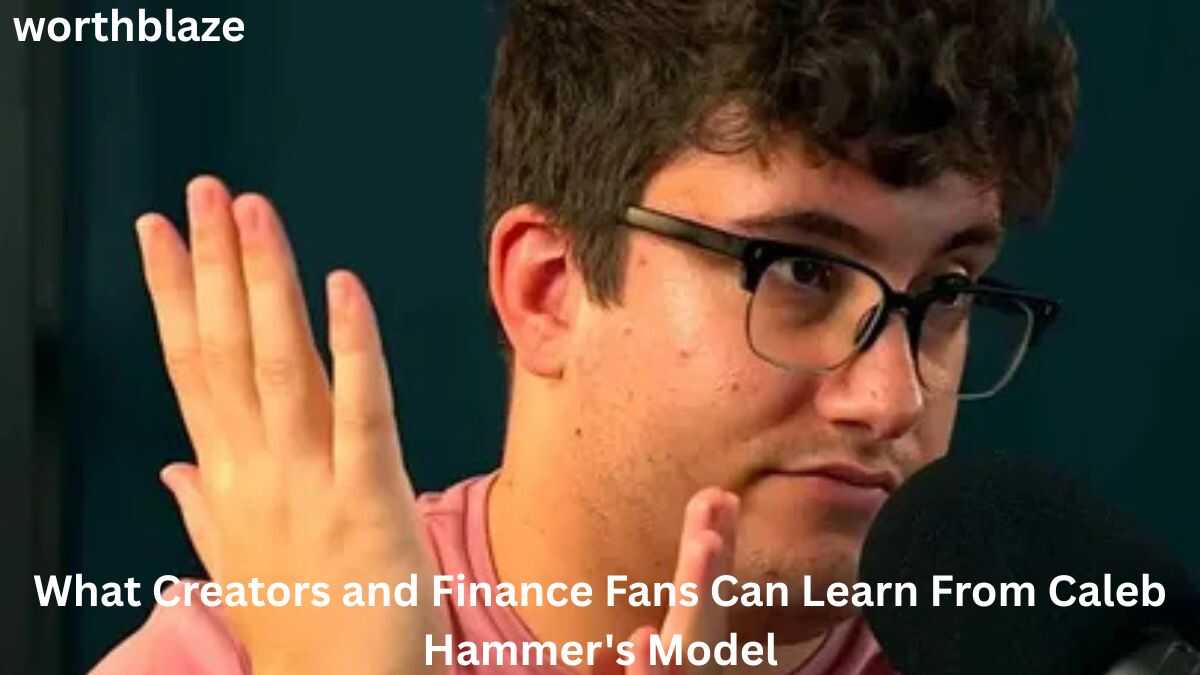
What Creators and Finance Fans Can Learn From Caleb Hammer’s Model
Why Authenticity Over Polish Wins in Finance Content
The biggest lesson from Caleb Hammer’s success is that authenticity matters more than appearance. He did not build his audience by creating the most polished videos. He grew because his content felt honest and relatable. His early videos were simple, his guests were everyday people, and his studio focused on function rather than style. What kept viewers watching was the real conversations and practical advice.
In personal finance, many creators focus either on luxury lifestyles or complex financial concepts. Caleb took a different approach by having direct and sometimes uncomfortable discussions about real financial situations. By addressing everyday money problems openly and honestly, he created content that people find useful, trustworthy, and genuinely valuable.
The Power of a Repeatable Format
Financial Audit succeeds because every episode follows the same structure. Introduction. Financial breakdown. Confrontation. Plan. Every time. That predictability is not boring — it is reassuring. New viewers can start with episode 400 and immediately understand the rules. Regular viewers know exactly what to expect, and they keep coming back because the format delivers a consistently engaging experience.
A repeatable format also makes production efficient. Caleb does not need to reinvent his content every week. He needs to find interesting guests and have honest conversations. The format does the rest.
Turning Your Worst Financial Mistake Into Your Biggest Asset
This is the lesson that applies most directly to his personal story. The $70,000 in debt he accumulated as a young person did not disqualify him from talking about money. It qualified him. His audience trusts him because he has been where they are. His credibility is established through failure, rather than through evading it. The worst thing that happened to him financially became the most commercially valuable asset in his career.
That principle extends far beyond finance content. The experiences that feel most disqualifying — the mistakes, the failures, the periods of genuine struggle — are often the experiences that create the most genuine connection with an audience looking for someone who actually understands their situation.
Also read: Druski Net Worth 2026
Frequently Asked Questions
What is Caleb Hammer’s net worth in 2026?
Caleb Hammer’s net worth in 2026 is estimated at $4–$5 million. His wealth comes from YouTube ad revenue, channel memberships, sponsorships, the DollarWise app, and Hammer Media.
How does Caleb Hammer make money?
His income comes from YouTube ads, channel memberships, brand sponsorships, the DollarWise budgeting app, podcast advertising, and Hammer Media’s production and consulting work.
Was Caleb Hammer really in debt?
Yes. Caleb Hammer has said he had about $70,000 in debt after high school, and his experience paying it off later inspired the Financial Audit series.
Is Caleb Hammer a licensed financial advisor?
No — he holds no formal financial credentials. He is a content creator and financial coach who is transparent about this distinction. He analyzes budgets and spending habits but does not provide investment, tax, or retirement planning advice that would require licensed credentials.
What is the Financial Audit show?
Financial Audit is Caleb Hammer’s YouTube show where real people voluntarily share their complete financial information — income, debt, spending habits, savings rate — for a thorough on-camera analysis. By November 2025, it had accumulated over 2 billion lifetime views and become the largest channel-membership program on YouTube.
Leave a Reply